CVSO Office Updates
This month my focus is on all things Community Care. Please take a look below for an in depth look at understanding and utilizing Community Care through VA Health Care!
Understanding Community Care
This guide from the U.S. Department of Veterans Affairs (VA) explains the process for receiving care from a local provider in the community.
Am I eligible to see a community care provider?
You may be eligible if you meet one of six eligibility criteria:
-
Service Unavailable: Needed services are not available at a VA facility (e.g., maternity care, in vitro fertilization).
-
Facility Unavailable: You live in a U.S. state or territory without a full-service VA medical facility.
-
Grandfathered Choice: You meet criteria under the Veterans Choice Program's distance rules.
-
Medical Interest: A VA provider determines that referral to a community provider is in your best medical interest.
-
Quality Standards: Needed care is not provided at VA facilities according to VA's quality standards.
-
Access Standards: You meet access standards for average drive time or appointment wait times.
Drive Time Access Standards
-
Primary care, mental health, and extended care services: More than 30 minutes average drive time.
-
Specialty care services: More than 60 minutes average drive time.
Wait Time Access Standards
-
Primary care, mental health, and extended care services: More than 20 days.
-
Specialty care services: More than 28 days.
Community Care Process Overview
-
Eligibility: VA confirms veteran's eligibility for community care.
-
Appointments: VA staff schedule an appointment with a community provider in the VA network.
-
Getting Care: Veterans receive care from the community provider.
-
Billing: The community provider sends claims to a Third-Party Administrator (TPA) or VA for payment.
-
Primary Care, Mental Health, and Non-Institutional Extended Care:
30 minutes drive time; 20 days wait time.
-
Specialty Care: 60 minutes drive time; 28 days wait time.
OTHER QUESTIONS YOU MAY HAVE
Do I need to meet all six criteria to be eligible for community care?
No, meeting any one of the six eligibility criteria may result in a referral to a community provider.
Does VA need to officially authorize the care I receive through a community provider?
Yes, typically. VA generally must authorize community care in advance before you can make an appointment and receive care from a community provider.
Can I go to any community provider I want?
No, you can only receive care from a provider in the VA network. To locate approved providers, visit https://www.va.gov/find-locations.
What is the process for getting prescription medication?
You can receive up to a 14-day supply of medication from a pharmacy in your community. Prescriptions for longer than 14 days must be filled by VA.
Do I have to pay a copayment for community care?
Copayment charges are similar to those for care at VA facilities. You will be charged a copayment for nonservice-connected conditions. Payments are made through VA, not the community provider.
Do I have to pay a copayment for urgent care?
Urgent care copayments depend on your VA priority group and the number of urgent care visits per year. Copayments are not paid upfront; VA bills these separately. For details, visit https://www.va.gov/health-care/copay-rates.
Does VA pay beneficiary travel expenses if I am referred to a community provider?
Yes, if eligible for beneficiary travel, expenses are covered regardless of whether care is provided by VA or a community provider.
When would it be in my best medical interest to receive community care?
Your VA provider will discuss your situation and determine if it is in your best medical interest. Examples include the type of care you need, the care's frequency, or the need for an attendant.
Who schedules my community care appointments?
There are multiple ways to schedule community care appointments:
- Directly schedule and inform a VA staff member.
- Use VA online scheduling for routine services.
- VA staff can schedule the appointment for you.
- A Third-Party Administrator (TPA) may schedule it.
Can I still see a VA provider even if I am eligible for community care?
Yes, you can continue care with VA providers for primary or specialty care while receiving community care.
How do I get help with adverse credit reporting and debt collection issues related to community care?
Call 866-400-1238 for assistance.
Tune in next month for a guide to accessing Urgent Care.
  Tiffany Canfield
Veteran Services Manager
Veteran Service Office Snapshot
December 2024
Total claims submitted to VA:
- Compensation: 88
- VA Healthcare: 7
- DIC: 0
- Burial: 15
- Survivor’s Pension: 1
- CHAMPVA: 0
- Records Request: 2
- Special Monthly Pension: 1
Points of contact with veterans (office visits, incoming mail, phone calls
returned, emails returned, etc.): 411
Veterans in office: 93
Outreach visits: 0
Total phone calls: 295
Average number of calls per day: 10
Average call length: 2 minutes and 35 seconds
Women Veterans Spotlight
February Mantra:
I am STRONG: My physical and intellectual powers are my greatest resources.
This month we are featuring Allyson Hurley, a near and dear friend of mine. She shares her wisdom regarding impactful and meaningful changes we can commit to each day to help us feel good about where we are at with our journey to achieve our goals and beyond.
Hi, I'm Allyson, a certified nutrition and health mindset coach, and the founder of Allyson Nicole Nutrition LLC. I offer online personalized 1:1 Nutrition Coaching, using evidence-based behavior change strategies to help women achieve their health and wellness goals.
A little about me—my brother has been serving in the Army for over a decade and is currently deployed. We’ve always been close, and it's been a privilege to watch him grow both personally and professionally throughout his career. Over the years, he’s shared with me how challenging it can be to reintegrate into a healthy routine after returning from deployment - both physically and mentally. I can only imagine how readjusting to civilian life comes with its own set of challenges, especially when it comes to getting back into a consistent routine.
Let’s discuss some practical strategies to help you return to or create a consistent and healthy routine.
First, one of the biggest barriers I see people face when working to improve their health is focusing too much on the "little rocks" rather than the "big rocks." For example - nutrient timing or what supplement to take (little rocks) vs adequate amounts of fruits and vegetables daily (big rocks). With all the overwhelming and often conflicting information out there, it's easy to get caught up in small details. However, if you want to make lasting, sustainable changes, it’s crucial to focus on the foundational habits—the big rocks—that will have the greatest impact.
The five key foundational habits I refer to as the “big rocks” of health—where you get the most bang for your buck—are:
1. Sleep Quality sleep is the cornerstone of good health! Aim for 7-9 hours
of restful sleep each night to allow your body to repair, regenerate, and
function at its best.
2. Hydration Your body is made up of about 60% water, and staying
hydrated is essential for everything from digestion to cognitive
performance. A good rule of thumb is to drink half your body weight in
ounces of water each day to stay energized and support overall health.
3. Movement Regular physical activity is a powerful tool for improving
overall health. Whether it’s walking, strength training, yoga, or anything in
between, moving your body helps maintain a healthy weight, improves
heart health, boosts mood, and increases energy.
4. Nutrition What you eat directly affects your energy levels, immune
system, and long-term health. Focus on whole, nutrient-dense foods that
fuel your body and promote well-being.
5. Stress Management Chronic stress can take a serious toll on both your
mental and physical health. Incorporating practices like mindfulness,
meditation, deep breathing, or simply taking time to unwind can help you
manage stress more effectively, allowing your body and mind to function
optimally.
Focusing on these first will provide you with a solid foundation for lasting change, making it easier to fine-tune the smaller details later on. Mastering the basics first is key.
Now that you have a clear understanding of the foundational habits, let’s discuss a strategy to help you gain awareness because, as they say, we cannot change what we don’t first know needs to be changed. Mental Contrasting is a great strategy to help you build awareness. If you’re familiar with Positive Visualization, Mental Contrasting is similar, but with a key difference. While Positive Visualization focuses only on imagining the desired outcome, Mental Contrasting takes it a few steps further. It encourages you to acknowledge where your current habits are, what it will really take to reach your goal, and the potential barriers you might face along the way. This process gives you the chance to identify any barriers and to create a strategy to overcome them.
Before diving into an example, I want to emphasize the importance of staying objective, practicing self-compassion, and not going “all in” too quickly. It’s common to want to go "all in" when trying to make change, but this approach can often lead to frustration and overwhelm because it’s too much, too fast. I like to refer to this as the classic "I’ll start again on Monday" cycle- a clear sign you are overhauling your habits too drastically. Habit-building takes time, requires regular evaluation, and may involve adjustments along the way. It’s crucial to remember: we can't shame ourselves into change. If something isn’t working, we simply need to adjust our plan.
Let’s take a look at an example of how one can use Mental Contrasting to build awareness and build a strategy to form or change new habits:
Susan wants to improve her daily movement, aiming to exercise intentionally for one hour four times per week and walk 10,000 steps a day. Using Mental Contrasting, Susan reflects on her current habits: she walks around 5,000 steps daily and does one hour of intentional exercise twice a week. She recognizes that time constraints and her office job, where she spends most of her day sitting, are barriers to reaching her goal.
To address these, Susan comes up with a few strategies: She decides to aim for 7,000 steps per day to start, which would be about a 20-minute walk she can fit into her lunch break. She also realizes she has an extra hour on Fridays to add a fourth day of intentional exercise. Over the next four weeks, she plans to test her approach and adjust it as needed, whether that means increasing or decreasing her steps or exercise based on what’s working. Once Susan is consistently hitting her current goal 80% of the time, she gradually increases it again and continues this process, evaluating and adjusting as needed, until she reaches her ultimate goal of 10,000 steps per day and exercising for one hour four days a week. By making small, sustainable adjustments along the way, she’s able to achieve significant, lasting results.
Remember, change starts with awareness. Mental Contrasting is a powerful tool that helps bridge the gap between where you are and where you want to be. By staying objective, practicing self-compassion, and focusing on foundational habits, you can make meaningful progress toward building healthier habits that support your mental and physical well-being.
************
Big thanks to Allyson for sharing her inspiration with us this month! For any additional questions or business inquiries, Allyson can be reached at allysonnicolenutrition@gmail.com or you can find her on Facebook and Instagram at: allysoncoaches
-Tiffany
“You can’t raise the bar without raising a little hell”- so let’s raise some hell, shall we ladies??
VA Online Accounts
Are You Ready for VA’s Sign-In Changes?
Don’t delay. Create your sign-in account today.

By now you may have heard that VA is making changes to our online sign-in process. We’re moving to 2 modern, secure sign-in account options, Login.gov and ID.me.
If you don’t have a Login.gov or ID.me account yet, don’t delay. These changes are happening soon. We’re removing the My HealtheVet sign-in option after January 31, 2025, and the DS Logon option after September 30, 2025.
Get step-by-step instructions for how to create an account on VA.gov
If you already have a Login.gov or ID.me account but haven’t yet used it, start now so you’re ready.
Note: Don’t worry. My HealtheVet isn't going away. You’ll still be able to use your My HealtheVet health portal—you’ll just need to sign in to it with an identity-verified Login.gov or ID.me account. And you can get your new account anytime. You’ll still have access to all the same information and services you use today.
How can I get help creating an account?
If you’ve tried to create your sign-in account and you’re having trouble, we have resources to help you.
Get support for common issues for Login.gov and ID.me accounts for VA
You can also get direct help with creating your sign-in account or verifying your identity by creating a ticket on the account provider’s help center. Their help desk staff will then contact you to help you resolve the issue.
Go to the Login.gov help center
Go to the ID.me help center
Why do I need to verify my identity?
Identity verification is a one-time process that helps us make sure that the person creating your account is really you—and not someone pretending to be you. During this process, the account provider (Login.gov or ID.me) will ask
you to provide certain personal information and identification (ID).
Learn about how to verify your identity on VA.gov
Continue to manage your VA health care with My HealtheVet
Once you setup a Login.gov or ID.me account, you’ll be able to use it to sign in to My HealtheVet. You’ll also be able to use it to sign in to any other VA website or mobile app. With your modern sign-in account, you can continue to manage your VA benefits and health care, while keeping your information and benefits secure.
"Waters Off" Community Event
Attention Veterans: Free Plumbing Repairs Available Through "Waters Off" Community Event
Plumbers and Pipefitters Local 6 is hosting their annual "Waters Off" event March 15th from 8am - 12pm, a community outreach initiative designed to assist those in need with minor plumbing repairs. This year, they’re extending their offer to partner with veteran organizations to support local veterans who could benefit from these services.
On Saturday morning, a team of 10-12 skilled plumbing service technicians will visit homes in the community to provide free plumbing repairs. Local 6 will cover all costs, ensuring there is absolutely no expense for the veterans receiving these services.
Examples of Repairs Provided Include:
- Fixing faucet issues
- Addressing garbage disposal problems
- Unclogging slow or blocked drains
- Resolving toilet issues
- Repairing leaking or dripping valves
- Replacing relief valves on water heaters
- Evaluating and addressing other minor plumbing concerns
If an issue cannot be resolved on-site, the technicians will offer guidance and point you in the right direction for further assistance.
This is a fantastic opportunity to address plumbing issues at no cost. If you or a veteran you know, or a veteran's widow, could benefit from this service, please contact Karen Applen for more information or to be added to the service list. Please, no trailers or rental properties. Must be able to prove veteran status.
CONTACT: Karen Applen - Olmsted County Veteran Services 507-328-6355
Turkey Hunt
Are you a veteran from southeast MN who loves to hunt turkey?
The Deer Creek Longspurs Chapter of the NWTF will be hosting a mentored veteran turkey hunt from May 1-4, 2025. The hunt will be based out of Racine, MN. If you would like an application form for the hunt, please contact Matt at 507-951-5614 or Will at 507-421-4424. We will select 8 lucky hunters for this year!
More information can be found on our Facebook page as well: NWTF – Deercreek Longspurs
Home Design Tips for People With PTSD
Beauty is a human experience that has deep connections with our mental health. Studies show that aesthetics trigger the reward systems in our brains. Simply put, aesthetic designs elicit emotional responses and make us feel happy. As such, someone with PTSD can benefit from having a beautiful home.
Today, we dive into home designs for people with PTSD. Let’s explore the best ways to design interiors for healing.
What Is PTSD? PTSD, or post-traumatic stress disorder, is a condition experienced by those who have witnessed a traumatic event. These events can include war, sexual assault, natural disasters, abuse, or accidents.
People with PTSD feel anxious even when there is no immediate danger. Fear can affect their lives and interfere with their school, work, and relationships.
Below are symptoms someone with PTSD may have:
-
Intense flashbacks
-
Difficulty sleeping and concentrating
-
Lack of motivation and interest in activities
-
Detachment and loneliness
-
Stomachaches and headaches
-
Memory problems
-
Negativity and irritability
Recovering from PTSD may require years of therapy sessions and medications. During this time, the patient must have a safe environment to relax and breathe.
The Importance of Home Design for People with PTSD Research in neurobiology shows that the environment influences brain development. Visual art also activates the parahippocampus, which plays a role in memory retrieval.
For people with PTSD, having a beautiful environment can help them heal. Designers should ensure they create a home that is stress-free, beautiful, and functional.
10 Home Design Tips for People With PTSD
-
Declutter the Home: Cleanliness has a direct effect on mental health. Clutter can lead to decreased focus and tension. Additionally, some objects may remind individuals of past traumas.
Decluttering the home should be the first step in redesigning for people with PTSD. Start by removing anything that does not bring happiness. Donate items to charity or host a yard sale.
A clean home can help individuals feel less overwhelmed and boost their mood.
-
Maximize Natural Light: Natural light has many benefits to physical and mental health. It helps the body develop vitamin D, reducing the risk of heart disease and weight gain.
Natural light also facilitates the sleep cycle, helping individuals wake up earlier and sleep better. It can ward off depression, which is crucial for people with PTSD.
If the home has small windows, use mirrors to bounce light across the room and make it brighter.
-
Choose the Right Colors: Chromotherapy is a practice that treats anxiety, depression, and sleep disorders by using colors to stimulate emotional responses.
Green is calming, blue can prevent migraines, purple aids in meditation, and yellows and oranges boost mood and concentration.
Home designers should choose lighter shades for the patient’s well-being and avoid colors like blood red, which can be triggering. Darker shades should also be minimized as they can make a room feel small and stifling.
-
Prioritize Air Circulation: People with PTSD often experience shortness of breath and disordered breathing, leading to increased panic attacks in poorly ventilated spaces.
Designers should maximize airflow by using large windows and cross-ventilation. Obstacles blocking airflow should be removed, and vents should remain unobstructed.
Installing exhaust or ceiling fans, electric fans, air purifiers, and humidifiers can help make the space more comfortable.
-
Consider Noise Reduction: Loud noises from outside, such as cars, sirens, or fireworks, can trigger difficult memories for people with PTSD.
To reduce noise, consider adding soundproofing to the walls and using materials that absorb sound, such as pillows, carpets, and curtains.
Decorations that produce calming sounds, like a mini water fountain or wind chime, can create a soothing ambiance.
-
Decorate with Plants: Bringing nature into the home is not just for aesthetics. Studies show that indoor plants relax our physiology and enhance cognition. They have a positive impact on mental functions and can help with stress recovery.
People with PTSD benefit from having plants at home because they can reduce anxiety, boost happiness, and improve productivity. Additionally, plants clean the air and create a humid, comfortable environment.
-
Invest in a Security System: The safety of the home is a vital factor when designing a space for someone with PTSD. Having a suitable security system can ease a trauma victim’s mind and make them feel more relaxed at home.
Ways to improve security include installing alarms, cameras, locks, and lights. Reinforcing windows, doors, air conditioning units, and sheds can further enhance security.
-
Clear Space for Activities: Recreational activities are essential for the recovery of a trauma patient. Hobbies help individuals take their minds off negative memories and provide a healthy outlet for emotions.
Spaces should be designed based on the patient's preferences, whether for meditation, yoga, crafting, or other hobbies.
-
Think About Accessibility: Designing a home for people with PTSD should consider accessibility for any disabilities they may have. Ensure doorways are wide enough for wheelchairs, install grab bars, lower tables, and incorporate ramps where necessary.
Bathrooms should be free of barriers, and smart home technology can enhance usability.
-
Have an Area for Pets: Pets provide comfort and companionship for people with PTSD. Consider designing pet-friendly spaces with scratch-proof flooring, a mudroom, pet doors, and storage for pet items.
Key Interior Design Considerations for People With PTSD
Don’t forget these key elements for designing a home for people with PTSD.
-
Go for Open Layouts: Most people with PTSD will prefer open spaces and high ceilings. Avoid building cramped rooms that can trigger traumas and claustrophobia.
-
Keep It Simple and Natural: Creating a beautiful space doesn’t mean incorporating extravagant decor. For people with PTSD, a simple and natural home design may be the best option.
-
Focus on Positivity: Make sure the space is bright, uplifting, and calming. Avoid decor and furniture that may trigger traumas.
-
Support Communal Spaces: If the person with PTSD lives with family, it helps to give them a space where they can spend time together. Yet, don’t forget to provide the patient with a safe and private place they can retreat to.
-
Think About Maintenance: People with PTSD may have a lack of motivation to clean. Because of this, it helps to design a home that’s easy to maintain and organize.
Conclusion
Home design plays an important role for people with PTSD. A well-designed space can affect a person’s recovery, help them relax, and boost their mood.
If you’re designing a home for someone with traumas, be sure to keep it bright, open, and positive. Pay attention to clutter, air circulation, security systems, and accessibility.
Finally, don’t be afraid to talk to the patient and ask what they need to have in the house. By doing so, you ensure that all their needs are met, and you can give them a safe space to live!
Article courtesy of Meble Furniture
Eligibility for State and National Cemeteries
Are you eligible for burial in a State Cemetery?
Burial is open to all Veterans discharged from active military service under conditions other than dishonorable. Their spouses, minor children, and under certain conditions, unmarried adult children are also eligible for burial. Eligible spouses may be buried, even if they predecease the Veteran.
Also eligible for burial are members of the reserve components of the Armed Forces, the Army and National Guard, and the Reserve Officer Training Corps who die while on active duty for training or performing service, or who have 20 years of service in reserve components of the Armed Forces creditable for retired pay.
What is Provided?
Cost
-
Veteran: $0 (all burial options)
-
Spouse/Eligible Dependent: $745 (all burial options)
Fees for spouse/eligible dependents cannot be prepaid and are subject to change.
Burial Arrangements
The funeral director or the next of kin makes burial arrangements for an eligible Veteran, spouse, or dependent at the time of need by contacting the Minnesota State Veterans Cemetery. A spouse or dependent is buried based on the eligibility of the Veteran.
To establish the Veteran's eligibility, a copy of the Veteran's military discharge document (DD214) must be provided. If these documents are not available, the cemetery must receive sufficient military information to allow access to federal U.S. Department of Veterans Affairs and/or military records to establish eligibility.
The cemetery staff will set a tentative date for the committal service pending verification of service and character of discharge and will notify the applicant when the committal service is scheduled. The proposed date and time will be approved only when eligibility is verified and arrangements are confirmed.
Are you eligible for burial in a National Cemetery?
Veterans, service members, spouses, and dependents may be eligible for burial in a VA national cemetery, as well as other benefits, if they meet one of these requirements.
One of these must be true:
* The person qualifying for burial benefits is a Veteran who didn’t receive a
dishonorable discharge, or
* The person qualifying for burial benefits is a service member who died
while on active duty, active duty for training, or inactive duty for training, or
* The person qualifying for burial benefits is the spouse or surviving spouse
of a Veteran (even if they remarried after the Veteran’s death), or
* The person qualifying for burial benefits is the minor child of a Veteran
(even if the Veteran died first) or, in some cases, the unmarried adult
dependent child of a Veteran
For groups, such as:
* U.S. citizens who served in the Armed Forces of a U.S. ally during wartime
* Members of Reserve components or the Reserve Officers' Training Corps
* Commissioned officers of the National Oceanic and Atmospheric
Administration
* Commissioned officers of the Public Health Service
* World War II Merchant Mariners
* Philippine Armed Forces Veterans
* Hmong individuals
Karen's Korner
Now that eligibility has been established at a national cemetery, what happens at the committal service?
When you arrive at the cemetery, a cemetery representative will meet you and provide the deceased’s burial documents. They will guide you, and others gathered to honor the deceased, to a committal shelter. The committal service takes place at this location, not at the gravesite, and lasts for approximately 20 minutes. The burial occurs after the committal service.
Important Information:
Please note that viewing facilities are not available at national cemeteries. The family must arrange for funeral services at a different location.
Committal Service Options:
The family may choose to include readings by a friend, family member, or a clergy member of their faith. Additionally, military funeral honors may be requested to take place at the committal shelter. These honors can be arranged through your funeral director, a Veterans Service Organization, or VA national cemetery staff.
Military Funeral Honors Include:
Note: If a headstone, marker, or medallion has been requested, it will be arranged for delivery within 60 days.
How can I pay my respects at a committal service?
You may:
-
Bring flowers to accompany the casket or urn when it is transported from the committal shelter to the gravesite.
-
Visit the gravesite at the end of the workday, but not immediately following the ceremony.
Camp Lejeune Water Contamination Health Issues
If you served at Camp Lejeune or Marine Corps Air Station (MCAS) New River between August 1, 1953, and December 31, 1987, you may qualify for VA disability and health care benefits.
Presumptive Conditions for VA Disability Compensation
To be eligible, you must have a diagnosis of at least one of the following conditions:
- Adult leukemia
- Aplastic anemia and other myelodysplastic syndromes
- Bladder cancer
- Kidney cancer
- Liver cancer
- Multiple myeloma
- Non-Hodgkin’s lymphoma
- Parkinson’s disease
Health Care Benefits
If you meet the service requirements, you may enroll in VA health care. If you have one of the following 15 covered health conditions, you will not have to pay a copay for treatment related to that condition.
Covered Health Conditions
- Bladder cancer
- Breast cancer
- Esophageal cancer
- Female infertility
- Hepatic steatosis
- Kidney cancer
- Leukemia
- Lung cancer
- Miscarriage
- Multiple myeloma
- Myelodysplastic syndromes
- Neurobehavioral effects
- Non-Hodgkin’s lymphoma
- Renal toxicity
- Scleroderma
Family Member Eligibility
To be eligible for health care benefits, you must meet all of the following criteria:
- You must be or have been a family member (birth/adopted child, married spouse, or legal dependent) of a Veteran who served at Camp Lejeune or MCAS New River.
- You must have lived at Camp Lejeune or MCAS New River for at least 30 days total between August 1, 1953, and December 31, 1987.
- You must apply for and be approved for benefits under current law.
Note: If you were "in utero" during this period, it means your mother was pregnant with you while living at Camp Lejeune or MCAS New River.
Covered Conditions for Family Members
If eligible,
VA may cover or reimburse care for the conditions mentioned above under Covered Health Conditions.
Warning About Claim Sharks
 A claim shark is an individual or company that illegally charges fees to “assist” or “consult” veterans with filing their VA benefit claims. Claim sharks are not VA accredited as required by federal law. Claim sharks target veterans or family members of veterans with aggressive and deceptive advertising. They then convince the veteran or family member to sign contracts with deceptive and unfair terms that require payment of large fees or even a percentage of benefit increases from claims, sometimes including claims that were filed with the VA before the contract with the claim shark was even signed.
There are several red flags to look out for when dealing with companies or individuals who claim to provide assistance with veteran services benefits, including:
- Promising or guaranteeing increased disability ratings or percentage increases.
- Telling veterans they can “start” for free.
- Characterizing their services as “coaching” or “consultation” in an effort
to avoid federal law and accountability.
- Collecting up-front fees for promised services but not following through.
- Requesting access to the veteran’s checking or savings account to
directly withdraw fees.
- Using high-pressure tactics to sign contracts.
- Advertising that it can deliver expedited VA claims decisions or that its services are superior to the free services offered by accredited actors.
- Using terms in their contract that falsely represent the veteran is doing
all the work that requires accreditation, and the company is only there to “answer questions” or “advise.”
- Telling the veteran that the company needs the veteran’s VA system
logins and passwords.
- Instructing veterans not to inform the VA that they are receiving assistance.
Attorney General Ellison encourages Minnesota veterans, as well as family and friends of veterans, to report any experiences or concerns with potential claim sharks. These reports will help the Attorney General’s Office ensure businesses comply with Minnesota law.
Scan this QR code with your phone’s camera to share your story with us or find our report form at: www.ag.state.mn.us/Veteran/Complaint
For additional resources and information for veterans and service members, please visit the Attorney General’s website at: www.ag.state.mn.us/Consumer/Vets/. The Attorney General’s Office has also released a Guide for Military Service Personnel and Veterans, which can be found here: Guide for Military Service Personnel and Veterans
Need Dental Work?
RCTC’s Dental Hygiene Program is looking for patients to be dental volunteers at the school. This is an opportunity for folks who don’t have dental insurance. For more information on how to get an appointment scheduled, contact:
Jasmin Willette at 507-280-3169 or 507-475-2807
Red Carpet Welcome
A letter from Patrick J. Kelly, FACHE, Director of the Minneapolis VA Health Care System
"Thank you for serving, and welcome to the Minneapolis VA Health Care System! We are pleased that you have chosen us for your care. Our mission is to improve the health and well-being of Veterans like you by providing the excellent medical care you’ve earned.
As a newly enrolled veteran, we invite you to attend a ‘Red Carpet Welcome’ orientation. This orientation is offered on the 2nd Thursday of each month at the Rochester VA Clinic. There is no need for an appointment; just come to the clinic and ask to be escorted to Room 102 at 1300. (Please look for the signs or ask how to find us at the front desk.)
NOTE: Red Carpet dates are now listed on the NEW Olmsted County Veteran Services website calendar.
The purpose of the orientation is to provide you with information regarding your VA health care benefits and health care services offered. We also will provide information to assist you in navigating the VA, both the building and the system.
We hope you will attend a ‘Red Carpet Welcome’ orientation during your first visit to the Rochester VA Clinic. If you can’t make it during your first visit, please feel free to come during one of your future visits.
You’ve given your best in your service to our nation. Now, the Minneapolis VA Health Care System is here to serve you."
Camp Bliss Events
2025 Camp Bliss Retreats for Veterans, Law Enforcement and People with Disabilities!
We are thrilled to share some exciting news with you! We have been very successful with our legislative pursuits for funding of Veteran Retreats and Getaways at Camp Bliss. Exciting News!
- We will not be charging a registration fees for Veteran getaways for the next two years, we have secured funding from the MDVA. For non-qualifying Veterans there will be a fee of $100 per person to attend a getaway or retreat. If you have questions about the guidelines please call Lori at (320) 281-2016.
- We will now be allowed to get reimbursement for Spouses, children, and active-duty service members!
You may come up to two retreats per year!!!! MDVA Calendar Year September 1, 2024 – August 30, 2025. We have added many exciting retreats due to this!! A complete list of 2024 Retreats and Getaways are listed below! **Because there will not be a registration fee, you will still be required to submit the appropriate documentation, DD214 (Member 4) and Driver’s license or state ID. If a spouse is attending and has a different last name, you will be required to show proof of marriage before you are considered “registered.” Once you are, please commit fully to attending your retreat as there are limited spots for each one and if you do not show up, that is a Veteran’s spot that you have eliminated
If a Retreat/Getaway says FILLED, please email or call Lori O. to be put on a waiting list: Register@campbliss.org or call 320-281-2016
2025 Upcoming Camp Bliss Retreats.
Flyers and Registrations will be available soon.
Female Veterans Getaway – January 31 – February 2, 2025
Veterans & Spouses Ice Fishing Getaway – February 7-9, 2025
Female Veterans Getaway – March 7-9, 2025
Veterans & Spouses R&R Getaway – April 11-13, 2025
Female Veterans Getaway – May 2-4, 2025
Veterans Turkey Hunt Getaway – May 16-18, 2025
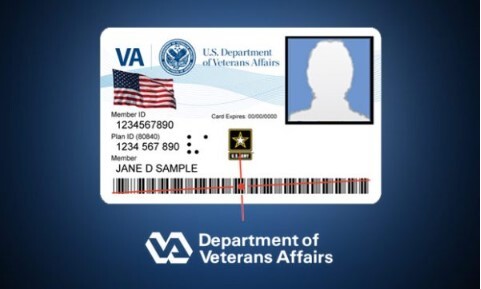
ID Cards at the Rochester VA Clinic
VA Health Identification Cards may be obtained at the Rochester VA Clinic by appointment only on the following date(s):
March 20, 2025 FULL
May 15, 2025 FULL
July 17, 2025 FULL
September 18, 2025 FULL
November 20, 2025 Filling up fast!!
You MUST be enrolled and eligible for care in order to receive a Veteran's
Health Identification Card!!
Please call the VA at 1-866-414-5058 to make an appointment in Rochester.
*The Minneapolis VA Medical Center issues ID cards daily.
There are different types, and different ways to obtain Veteran ID Cards. Click HERE for more information.
JOBS
Local Service Organization Meetings
For a full list of local organizations and meetings, please click on the blue button.
"To promote the interests and welfare of veterans, their dependents and survivors and to enhance their quality of life through counseling, claims assistance, education, advocacy and special projects."
2100 Campus Dr. SE, Suite 200
Rochester, MN 55904
507-328-6355
|